Melbourne, Australia: Remote Work City Guide
- Your workday here
- Your 8–5 becomes 3AM–12PM
Best for: working earlier in the day · English-speaking · Mild climate
- High livability
February
Year-round average
113% of US
Compared to US index (100)
15–25°C
Target -10–50°C
6 rainy days
45 mm/mo · target 0–31 days
3AM–12PM
2h overlap with your schedule
English
5.4M
High
81
High
83
High
88
Very high
Map of Melbourne
- JanCool
- FebCool
- MarIdeal
- AprCold
- MayCold
- JunCold
- JulCold
- AugCold
- SepCold
- OctCold
- NovCool
- DecCool
- Ideal
- Warm
- Cool
- Cold & Wet
- Cold
- Hot & Dry
- Hot
Match score breakdown
Melbourne, Australia
Strong fit for high livability.
Last updated August 2, 2026
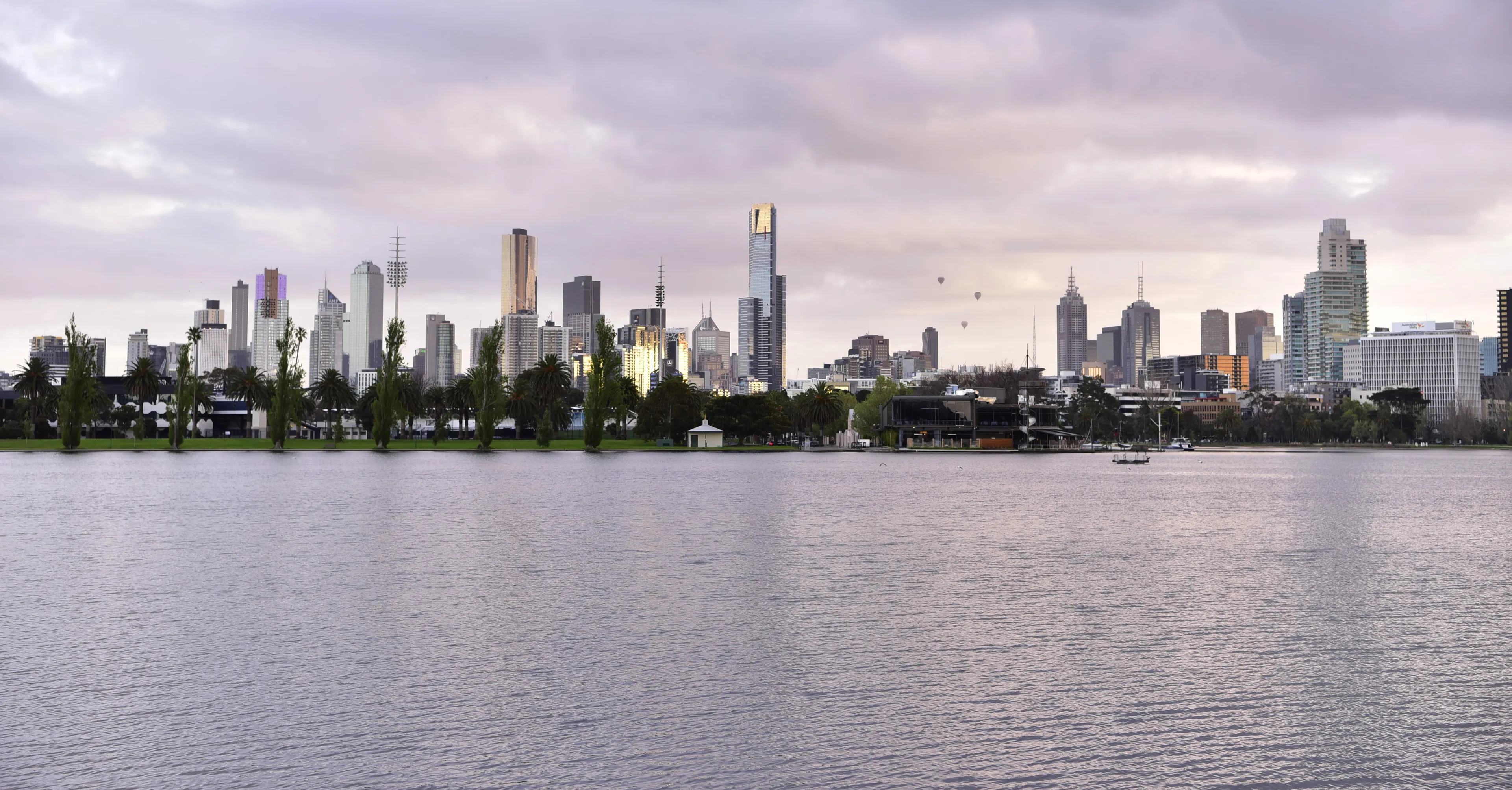
Melbourne, the state capital of Victoria, has a cost of living at 113% of the US baseline.
English is the main language. You would work from 3AM to 12PM local time in February. The best month for moderate weather is February, averaging 20°C with about 6 rainy days. The city sits at an elevation of about 25 m.
Livability is high, with high safety (81), high healthcare (83), and very high digital infrastructure (88).
- Cost of living
- 113% of USWorld Bank PPP at country level unless this is a US city with a regional index.
- Healthcare access
- 83/100Country-level access index for Australia, not hospital quality in Melbourne.
- Safety
- 81/100Global Peace Index component for the country.
- Livability
- High82/100 country composite (safety, healthcare, digital).
- Languages
- English
Melbourne averages about 14°C–24°C from November through March, with roughly 51 mm of rain in a typical winter month.
The Desk Port is not medical, visa, tax, or financial advice. Healthcare figures are country-level access indexes, not hospital quality or a treatment recommendation.